7 Step to Master Advocacy: Essential Tips for Effective Legal Representation
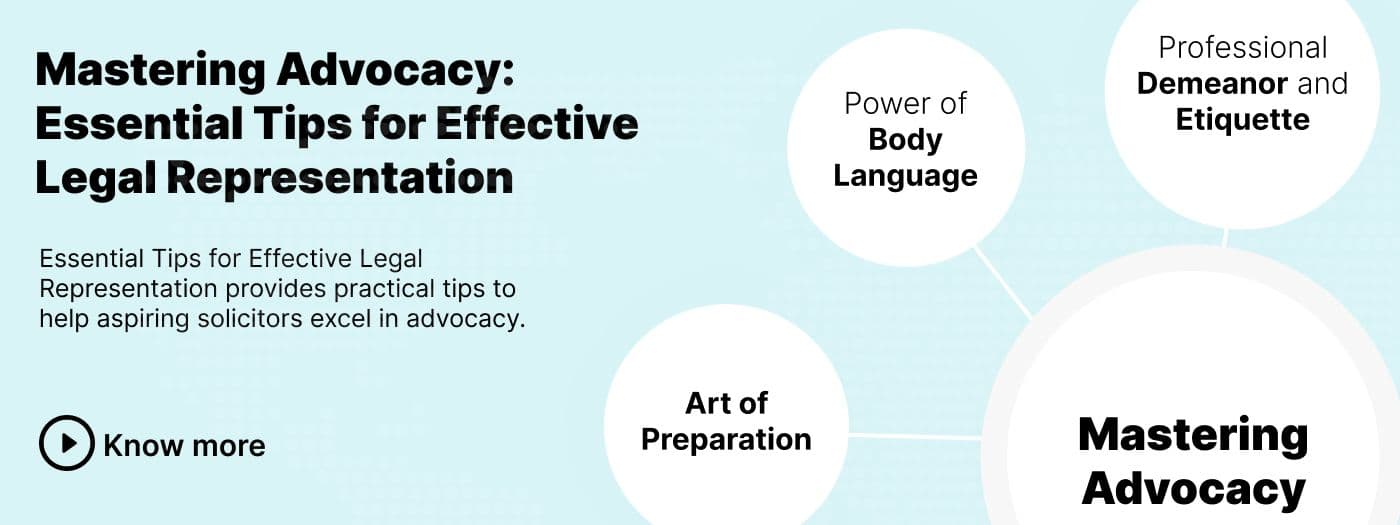

Advocacy is a fundamental skill for solicitors, requiring the ability to present compelling arguments and persuasively articulate a client's case. This article provides practical tips to help aspiring solicitors excel in advocacy. By honing essential skills, understanding key strategies, and embracing professional etiquette, solicitors can become effective advocates and adeptly navigate the courtroom.
7 Step to Master Advocacy
Master the Art of Preparation
Thorough preparation is the cornerstone of effective advocacy. Carefully analyse the facts, research relevant legal principles, and anticipate opposing arguments. Prepare a well-structured case outline, ensuring clarity and coherence in presenting your client's position.
Develop Persuasive Communication Skills
Effective advocates are skilled communicators. Cultivate clarity, conciseness, and coherence in your oral presentations. Employ varied tones and gestures to engage the audience, convey conviction, and emphasise key points. Actively listen to opposing counsel and the judge to respond thoughtfully and address concerns effectively.
Harness the Power of Body Language
Non-verbal cues can significantly impact the effectiveness of your advocacy. Maintain confident posture, make purposeful eye contact, and use appropriate facial expressions to convey sincerity and credibility. Gestures should be deliberate, reinforcing your arguments and capturing attention without becoming distracting or exaggerated.
Embrace the Art of Persuasion
Persuasion is an essential skill in advocacy. Craft compelling narratives, utilising facts and legal principles to build persuasive arguments. Appeal to logic, emotions, and the judge's sense of fairness. Use rhetorical devices and analogies to simplify complex concepts and make your case relatable.
Maintain Professional Demeanour and Etiquette
Professionalism and respect are paramount in advocacy. Demonstrate courtesy towards opposing counsel, witnesses, and the judge. Adhere to court rules, speaking only when appropriate and seeking permission when necessary. Remain composed, even when faced with challenging situations, and avoid personal attacks or disrespectful language.
Practice Effective Cross-Examination
Mastering the art of cross-examination is crucial for effective advocacy. Prepare thorough and focused lines of questioning to elicit favorable responses or expose weaknesses in the opposing party's case. Listen attentively to the witness's responses, adapt your strategy accordingly, and maintain control of the examination without being overly aggressive.
Adapt to Different Courtroom Settings
Different courtrooms may have unique procedures and dynamics. Familiarise yourself with the specific rules, customs, and expectations of each court. Tailor your advocacy style to suit the venue, adapting to the judge's preferences and the dynamics of the courtroom.
Conclusion
Becoming a skilled advocate requires a combination of thorough preparation, persuasive communication, professionalism, and adaptability. By mastering these essential skills and incorporating effective strategies, solicitors can excel in advocacy. Embrace opportunities to practice and seek feedback to continually refine your abilities. With dedication and continuous improvement, you can become a confident and compelling advocate, effectively representing your clients in the legal arena.
Stay up to date
Never miss the latest SRA updates. Receive product updates, news and customer stories right into your inbox.

Keep reading
![1,000+ Free SQE1 Sample Questions MCQ [2026 Updated List]](/_next/image?url=https%3A%2F%2Fcdn.sanity.io%2Fimages%2F77h4lrsj%2Fproduction%2F1faab4fce69ffdd6ecf10237b7d76a5d362534f1-3206x1496.png&w=1920&q=75)
Last updated: 25 July 2026 — checked against the SRA's current sample-question bank, the January 2026 SQE1 statistical report, and every provider page linked below.
Read the article